If you are selling on TikTok Shop, Amazon FBA, or scaling a D2C brand on Shopify, you already know the sinking feeling of seeing a return notification.
Most sellers treat returns as a simple metric: "I sold it for £20, refunded £20, so I’m back to zero."
If only it were that simple.
As an ecommerce accountant working with seven-figure brands, I see the real damage high return rates do. It’s not just about the lost sale; it’s the reverse logistics, the inventory write-offs, and the surprisingly complex VAT compliance headaches that follow.
When you’re pushing high volumes—especially on impulse-buy platforms like TikTok Shop—a 5% increase in your return rate can wipe out 20% of your net profit if you aren't tracking the data correctly.
Here is how high returns are impacting your cash flow, your tax bill, and your sanity.
The Hidden Cost of Reverse Logistics
When a customer sends a product back, you don’t just lose the revenue. You incur a new set of costs that often go untracked in basic P&L sheets.
This is what we call Reverse Logistics.
What is Reverse Logistics?
Definition: The process of moving goods from their typical final destination (the customer) back to the seller or manufacturer for the purpose of capturing value (reselling) or proper disposal.
For a UK seller, this usually looks like:
Return Shipping: Who pays the Royal Mail or courier fee? (Often you).
Processing Fees: If you use a 3PL or Amazon FBA, you are charged a fee just to put that item back on the shelf.
Packaging Waste: The box it came back in is likely destroyed.
Staff Time: Someone has to open it, inspect it, and decide if it’s sellable.
What this means for you: If your gross margin is 30%, and your return rate is 20%, your actual margin is likely closer to 15-18% once you factor in the cost of handling those returns. You need to account for these "soft costs" in your pricing strategy.
The VAT Trap: Handling Refunds and Credit Notes
This is where things get messy, and where I see new sellers overpaying HMRC.
When you make a sale, you owe VAT to HMRC. When you process a refund, you are entitled to reclaim that VAT. Ideally, this balances out.
However, the timing and the paperwork matter.
The Common Pitfall
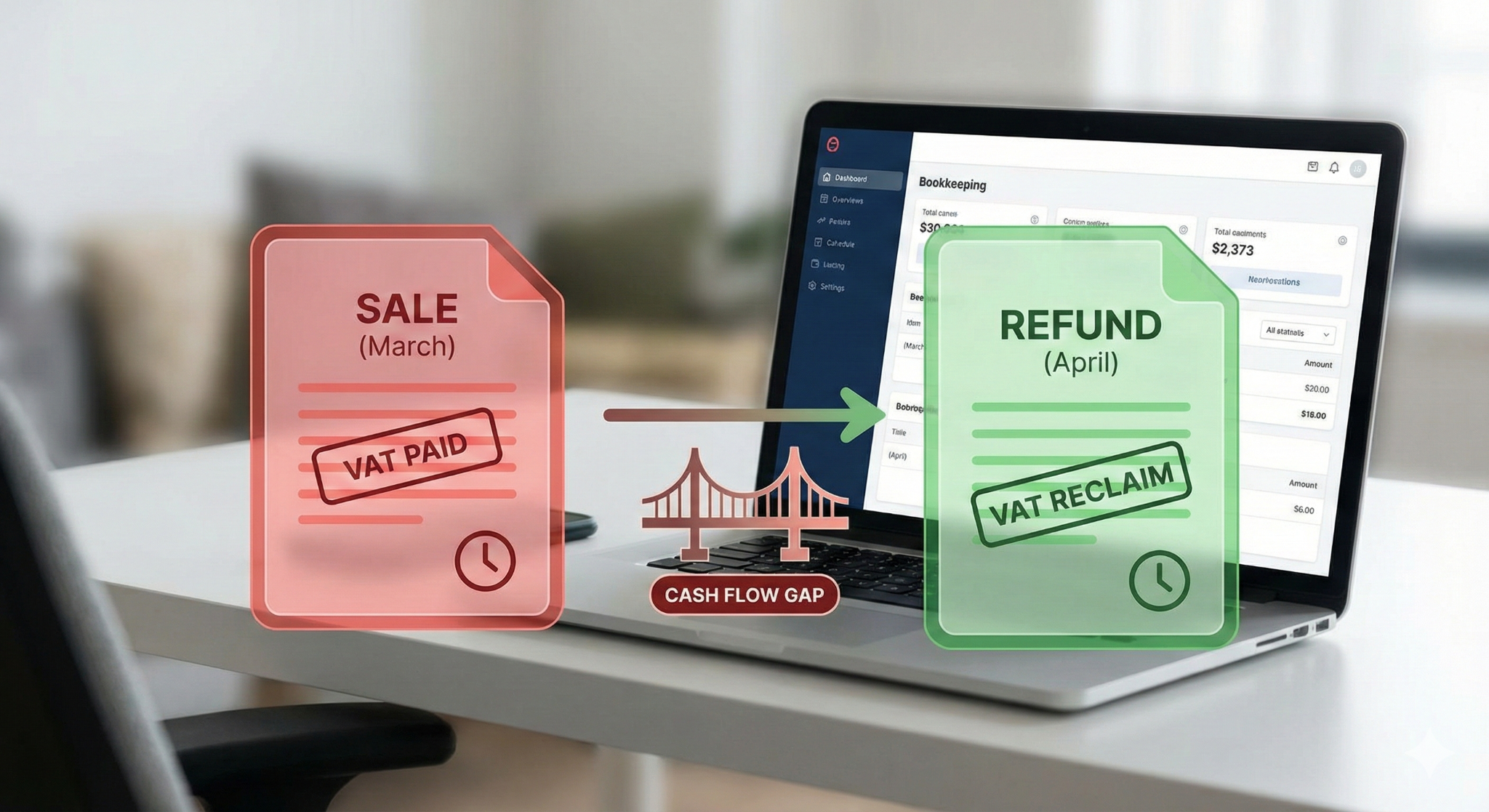
If you sell an item in March (and pay the VAT in your Q1 return) but the customer returns it in April (Q2), you have a cash flow gap. You have paid the tax on money you no longer have.
You must ensure your bookkeeping software (Xero or QuickBooks) is accurately mapping refunds to the correct tax codes. If you treat a refund as a general "expense" rather than a negative sale (Credit Note), your VAT return will be incorrect.
Key VAT Rule: You can only reclaim the VAT if you have refunded the customer. If you offer a partial refund, you only adjust the VAT on that partial amount.
The Inventory Management Nightmare
High return rates destroy accurate inventory management.
On platforms like TikTok Shop or Amazon, returned items are often flagged as "unfulfillable" or "customer damaged."
Amazon FBA: If Amazon deems it unsellable, they might destroy it (charging you a disposal fee) or return it to you (charging a removal fee).
TikTok Shop: The volume of returns can be higher due to the impulse nature of the platform.
The "New vs Used" Dilemma
If a clothing item comes back smelling of perfume or missing a tag, you cannot sell it as new. You have to:
Sell it as "Grade B" stock (lower revenue, same VAT rate).
Write it off completely (loss of cost of goods).
Donate it (specific VAT rules apply here).
If you are not regularly reconciling your "unfulfillable" inventory, you are paying storage fees on dead stock that is dragging down your bottom line.
The Creator Economy Blindspot
This is a specific issue for my clients working with influencers and affiliates.
When an influencer drives a sale, you pay a commission. When that item is returned, you should get that commission back (or not pay it in the first place).
The problem? The integration software for creators and affiliates basically doesn't exist yet in a robust form for small-to-mid-sized businesses.
Most affiliate platforms do not talk to your returns portal in real-time.
Scenario: You pay an influencer £500 commission for £5,000 in sales.
Reality: £2,000 worth of those goods are returned next week.
Result: You paid commission on sales that didn't happen.
What this means for you: Until the software catches up, you need a manual reconciliation process. Before paying out monthly affiliate invoices, you must cross-reference against your return data from 30 days prior.
Strategies to Mitigate Return Damage
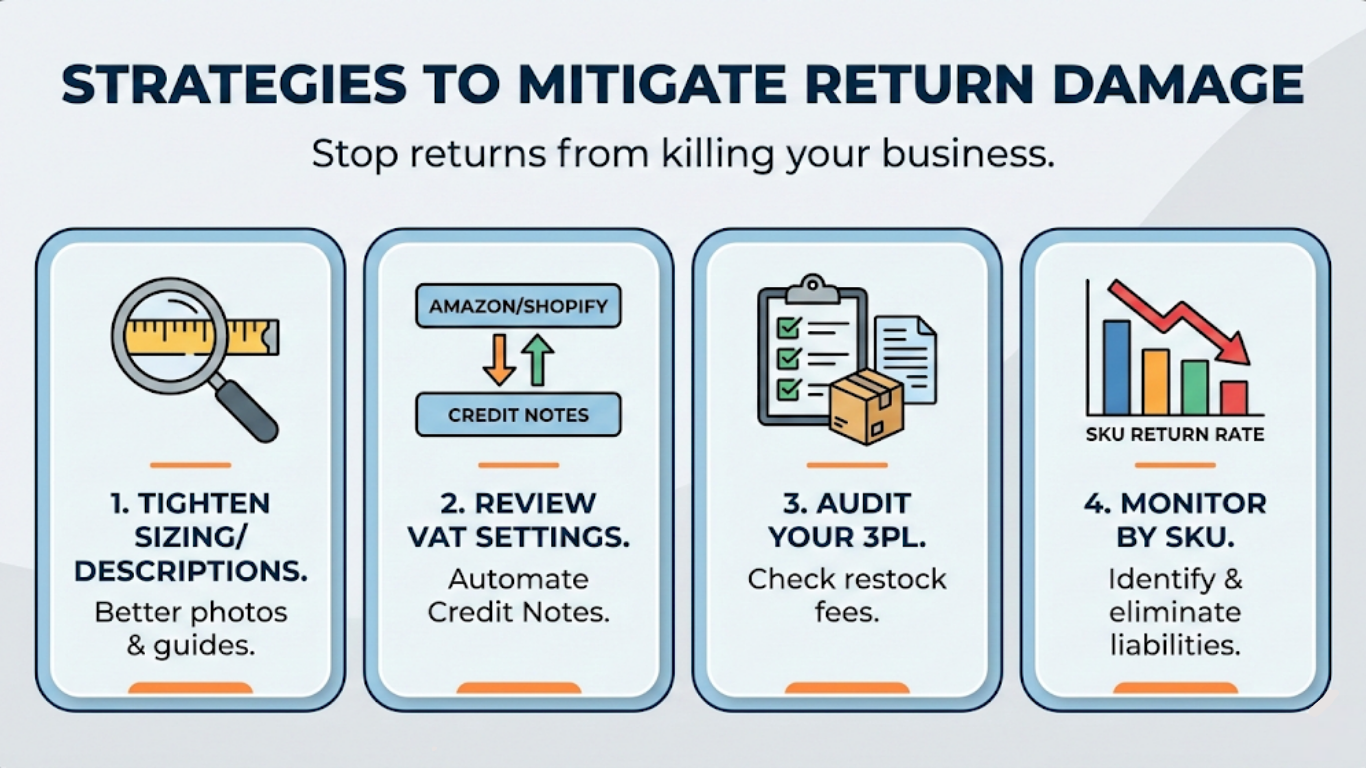
You can’t stop returns, but you can stop them from killing your business.
Tighten your sizing/descriptions: 60% of returns are due to "item not as described" or fit issues. Better photos and size guides reduce this.
Review your VAT settings: Ensure your Amazon/Shopify integration is set to automatically generate Credit Notes for refunds.
Audit your 3PL: Are they charging you to restock items that should be disposed of? Check the invoices.
Monitor Return Rate by SKU: Identify which specific products are causing the issue. If one SKU has a 40% return rate, kill it. It’s not an asset; it’s a liability.
Summary
Returns are inevitable in ecommerce, but they don't have to be a mystery. By understanding the impact on your VAT compliance and factoring in reverse logistics costs, you can protect your margins.
If you are worried that your returns aren't being accounted for correctly in your tax returns, let’s have a chat. We can look at your Xero setup and see where the leaks are.
This guide is not financial advice. All content is for educational purposes only. Please consult a qualified accountant or financial advisor to discuss how these strategies apply to your specific business circumstances before making any financial decisions.
Sam Hoye
Founder
Sam Hoye is a specialist ecommerce accountant and founder of Social Commerce Accountants. With years of experience advising TikTok Shop sellers, Amazon FBA brands, and D2C influencers, Sam builds modern, scalable financial systems for the next generation of retail.
Forget generic templates. Answer a few quick questions and our AI will generate a custom 12-month Excel profit engine tailored to your specific marketplace and supply chain.
Custom-Built Architecture
Logic that adapts to your setup—whether you sell on Shopify, Amazon FBA, or TikTok Shop.
Tax & Logistics Ready
We bake in the hard stuff: UK VAT, EU OSS, and complex landed cost calculations automatically.
True Profit Clarity
A professional-grade dashboard delivered instantly. See your real margins and forecast with confidence.


.svg)